評価分科会名: 爬虫類・両生類分科会
1. 判定対象種情報 日本固有
| ⽬名 | 有尾目 | 科名 | サンショウウオ科 |
|---|---|---|---|
| Order | Caudata | Family | Hynobiidae |
| 和名 | タゴサンショウウオ | ||
| 学名 | Hynobius tagoi Dunn, 1923 | ||
2. カテゴリー判定: 絶滅危惧ⅠB類(EN) 判定基準: B1ab
| 基準A: ― | 基準B: EN | 基準C: ― | 基準D: ― | 基準E: ― |
B1.出現範囲が5000 km²未満であると推定されるほか、次の兆候が見られる。 a) 生息地が過度に分断されているか、5以下の地点に限定されている。 【地点数】5地点以下 b) 出現範囲、生息地面積、生息地の質、生息地点数、成熟個体数のいずれかに継続的な減少が推定・予測される。 【判断理由】 森林伐採や河川工事で、生息環境が減少している可能性が高い。
3. 概要
小さな島に生息する国内の小型サンショウウオは珍しく、さらに流水産卵性の種は限られる。繁殖場所かつ幼生の生息場所である渓流と、その周辺の変態後個体の生息環境である林床の破壊が絶滅に直結する可能性のある種である。
4. 掲載種の情報
基礎情報
【形態】
全長 101~134 mm、頭胴長 56~71 mm。肋条数は13本、鋤骨歯列は深いV字型。体色は灰褐色で、細かい黒点がある。尾の背稜は他より少し色が薄い。幼生は、止水性のサンショウウオに見られるバランサーをもち、指先に爪がない。
【生活史】
2~3月頃に産卵し、ツシマサンショウウオよりも早い。ゆるやかな渓流の浅い水中の石の下などに卵嚢が産みつけられる。産卵数は21~62。幼生は渓流中で生活し、その年の秋に変態・上陸する。越冬幼生は知られていない。
【生息・生育環境】
平地から丘陵の森林の小さな渓流周辺に生息する。
| 生息・生育環境区分 | 【陸域_低標高地】森林,河川源流域,河川上流域 |
|---|---|
| 国土地域区分 | (1)奥山自然地域,(4)河川・湿地地域 |
【分布域】
対馬のみに分布。上島に広く分布するが、下島の北部にもわずかに生息している。
現在の生息・生育状況
【分布域の現況】
上島と下島は1900年に掘削されて万関瀬戸が開通したために、現在は分断されている。他の島の分布記録はない。生息地では個体数が多いことが普通。
【生息・生育地の現況】
沢の砂防堰堤建設や周辺の樹林伐採が進んでいるほか、丘陵の谷の開口部の舗装道路の建設、宅地化などの開発が進み、好適な生息環境が失われてきている。
【個体数の現況】
個体数は不明だが減少している可能性がある。
存続を脅かす要因
幼生は水温の上昇に弱いことから沢の水温環境の悪化が悪影響を及ぼす可能性がある。マニアや業者による違法捕獲が行われている可能性がある。
| 要因の区分 | (過去) | 森林伐採,河川開発,交通インフラ建設,分布・産地局限 |
|---|---|---|
| (現在) | 森林伐採,河川開発,交通インフラ建設,分布・産地局限 |
特記事項
比較的最近分類変更があっため、地方自治体のレッドリストや保護に係る法令指定、各種文献等では、分類変更前のタクソン(広義カスミサンショウウオ)として扱われている場合があることに注意が必要。
旧レッドリストカテゴリーと掲載名
| 第4次 2020 | ― | ― | ― |
| 第4次 2019 | ― | ― | ― |
| 第4次 2018 | ― | ― | ― |
| 第4次 2017 | ― | ― | ― |
| 第4次 2015 | ― | ― | ― |
| 第4次 | ― | ― | ― |
| 第3次 | ― | ― | ― |
| 第2次 | ― | ― | ― |
| 第1次 | ― | ― | ― |
都道府県レッドリストデータブック掲載状況(令和6年度末時点)
掲載なし
保護に係る法令指定状況(令和7年度末時点)
特定第二種国内希少野生動植物種
5. 参考⽂献
Niwa, K., M. Kuro-o, and K. Nishikawa, 2021. Discovery of two lineages of Hynobius tsuensis (Amphibia, Caudata) endemic to Tsushima Island, Japan. Zoological Science, 38: 259–266. Niwa, K., D. V. Tran, and K. Nishikawa, 2022. Differentiated historical demography and ecological niche forming present distribution and genetic structure in coexisting two salamanders (Amphibia, Urodela, Hynobiidae) in a small island, Japan. PeerJ, 10: e13202. Niwa, K., N. Yoshikawa, K. Nishikawa, and M. Matsui, 2022. Development of eight microsatellite markers for the Tsushima salamander, Hynobius tsuensis, and its close relatives (Amphibia: Caudata) with preliminary analysis of genetic differentiation. Current Herpetology, 41: 125–131. Niwa, K., K. Nishikawa, M. Matsui, S. Kanamori, and M. Kuro-o, 2023. Taxonomic reassessment of salamanders (genus Hynobius) from Tsushima Islands, Japan, with a resurrection of Hynobius tagoi Dunn, 1923 (Amphibia: Caudata). Zootaxa, 5339 (3): 201–236.
6. アセスメントサマリー(Assessment summary)
Hynobius tagoi has been assessed for threatened wildlife of Japan Red List 5th edition. Hynobius tagoi is listed as EN under criteria B1ab.
B1. Extent of occurrence estimated to be less than 5,000 km², and estimates indicating at least two of a-c: a. Severely fragmented or known to exist at five or fewer locations. b. Continuing decline, observed, inferred or projected, in any of the following: (i) extent of occurrence (ii) area of occupancy (iii) area, extent and/or quality of habitat (iv) number of locations or subpopulations (v) number of mature individuals
| Habitat types | 【Terrestrial/Freshwater area_Low-altitude area】Forest, River headwater, Upper river basin |
|---|---|
| Threat types | Logging and wood harvesting, River development, Transportation infrastructure construction, Limited distribution |
| Law designation status for conservation | Specified class II nationally rare species of wild fauna and flora. |
| 執筆者: | 西川完途(京都大学)・松井正文(京都大学) |
| Author: | Kanto Nishikawa and Masafumi Matsui |
| 協力者: |
公開年月:2026年3月
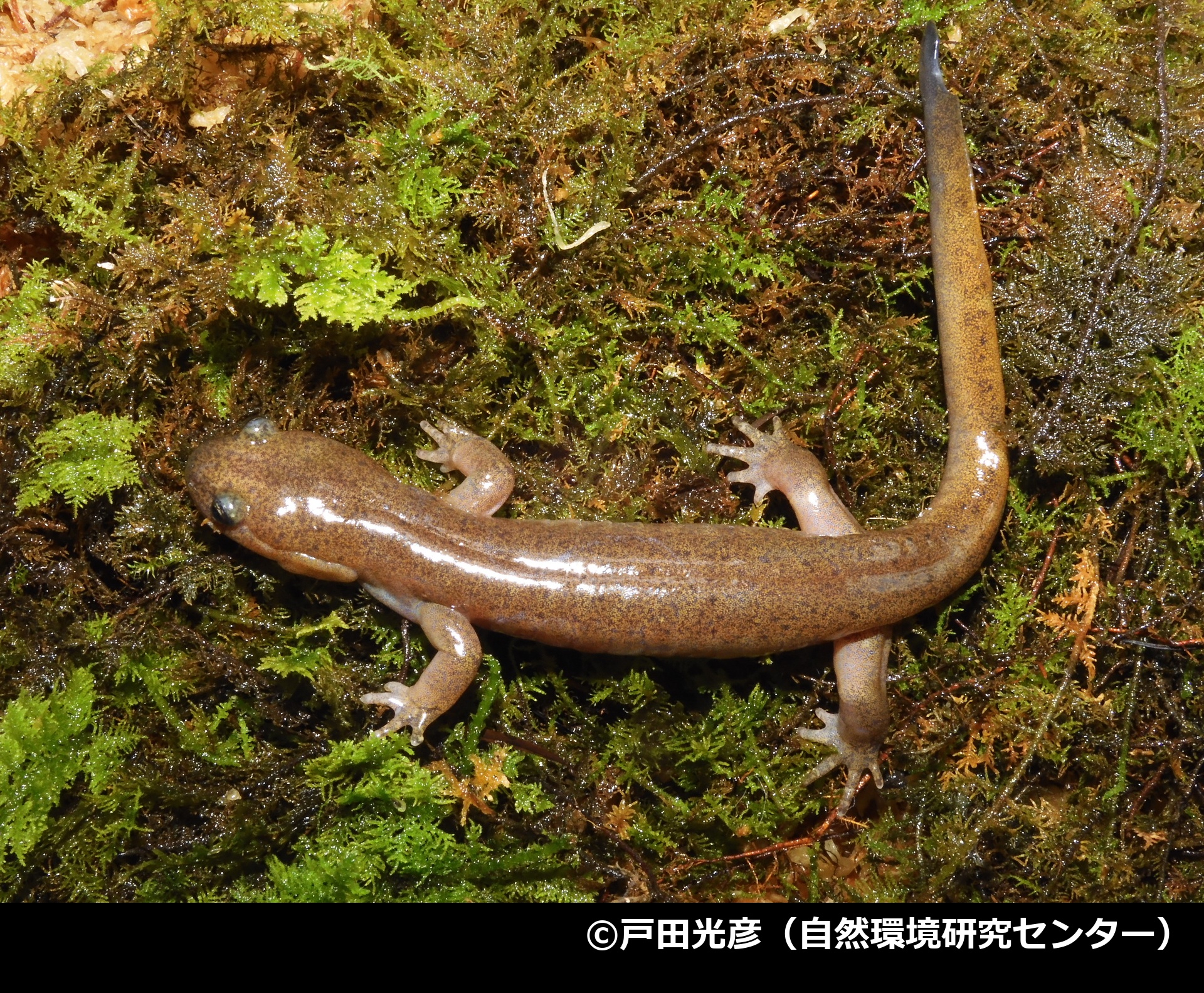
©戸田光彦(自然環境研究センター)
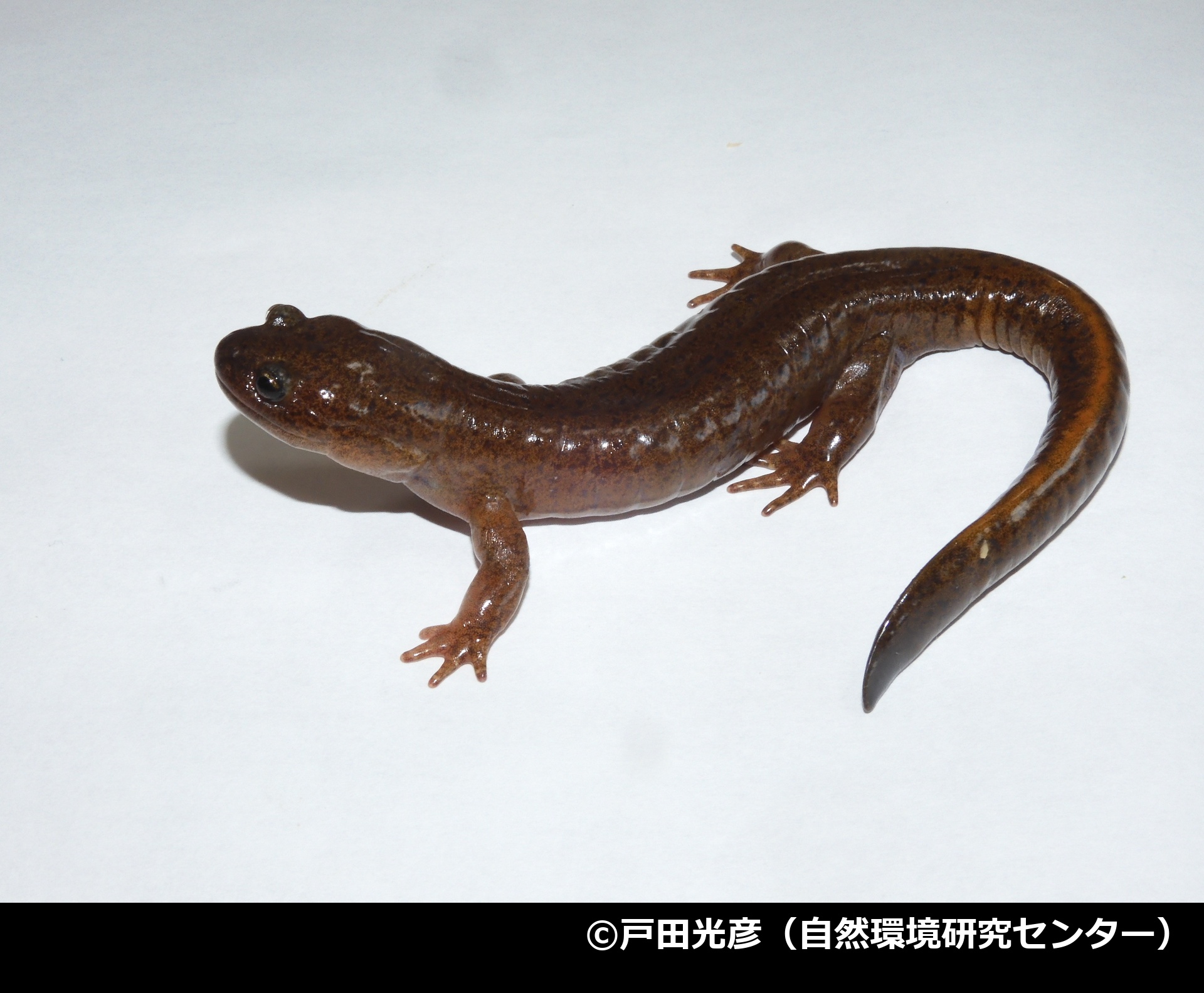
©戸田光彦(自然環境研究センター)